
Explaining Plant Pot Sizes
Also the importance of frost in the garden
Hello Garden Lovers
Finally here in the Hilltops Region after a milder start to the cold season, a series of proper morning frosts has settled over the landscape. These freezing temperatures are a welcome sigh of relief for the garden. Frost is nature’s definitive signal for plants to drop their remaining leaves and sink into deep, essential dormancy. Beyond giving our gardens a much-needed winter rest, these sustained cold snaps play a critical operational role—they break the lifecycle of overwintering pests, resetting the clean slate we rely on for a healthy spring burst. Often when we have had a warmer winter the number of pest and diseases a garden will experience the following summer are in much greater numbers. A number of heavy frosts will actually help a garden in the long run.
There is a quiet, understated magic to a bare winter garden stripped down to its architectural bones. Without the lush distraction of summer canopy and overflowing foliage, the true structure of the landscape steps into the spotlight: the silhouette of deciduous branches, the crisp lines of stone walls, and the textural contrast of bark and bare earth. Embracing this stark elegance allows us to appreciate the bones of our spaces in a way no other season permits, offering a peaceful pause to reflect on garden layout before the rush of green returns.
Yet even in the depth of winter rest, the garden is far from lifeless. Emerging right through the frosty ground are stunning swathes of winter bulbs, piercing the muted tones with vibrant, optimistic colour. Seeing masses of early blooms push through the chill is a incredible reminder of nature’s resilience and rhythm.
In this week’s newsletter I explain the difference between plant pot sizes. from the smallest to more advanced specimens. I will give you my tips and recommendations for selecting the right pot size for your planting.
Thanks for reading
Happy Gardening
Glenice
Explaining Plant Pot Sizes
Once you know which plant species you want to use in your garden you are then faced with the task of deciding what size plants to select. When I say what size plants to select I mean what pot size you want to select. In the nursery industry whilst you will select the plant species the pot size is what normally determines the cost of the plant. The pot size of the plant should not affect the quantity of plants you wish to purchase or the layout of the plants however it will influence the cost, growth rate and establishment timing.
The standard pot sizes you will see in nurseries are;
Tubestock 20mm 30mm 40mm
Pots - 100mm (4 Inches), 140mm ( 6 inches), 200mm (8 inches), 250mm (10 inches), 300mm (12 inches), 400mm (16 inches), 500mm (20 inches),
Bags - 25 Litre, 45 Litre, 75 Litre, 100 Litre, 150 Litre, 200 Litre, 300 Litre, 400 Litre and larger.
I have listed here the millimetre size and inch sizes in pot as the nursery industry in Australia still switches between the 2 units of measurments. Overseas often all pots are called by the capacity size for example gallons. In Australia the measurements listed above refers to the diameter of the actual pot across the top of the pot.
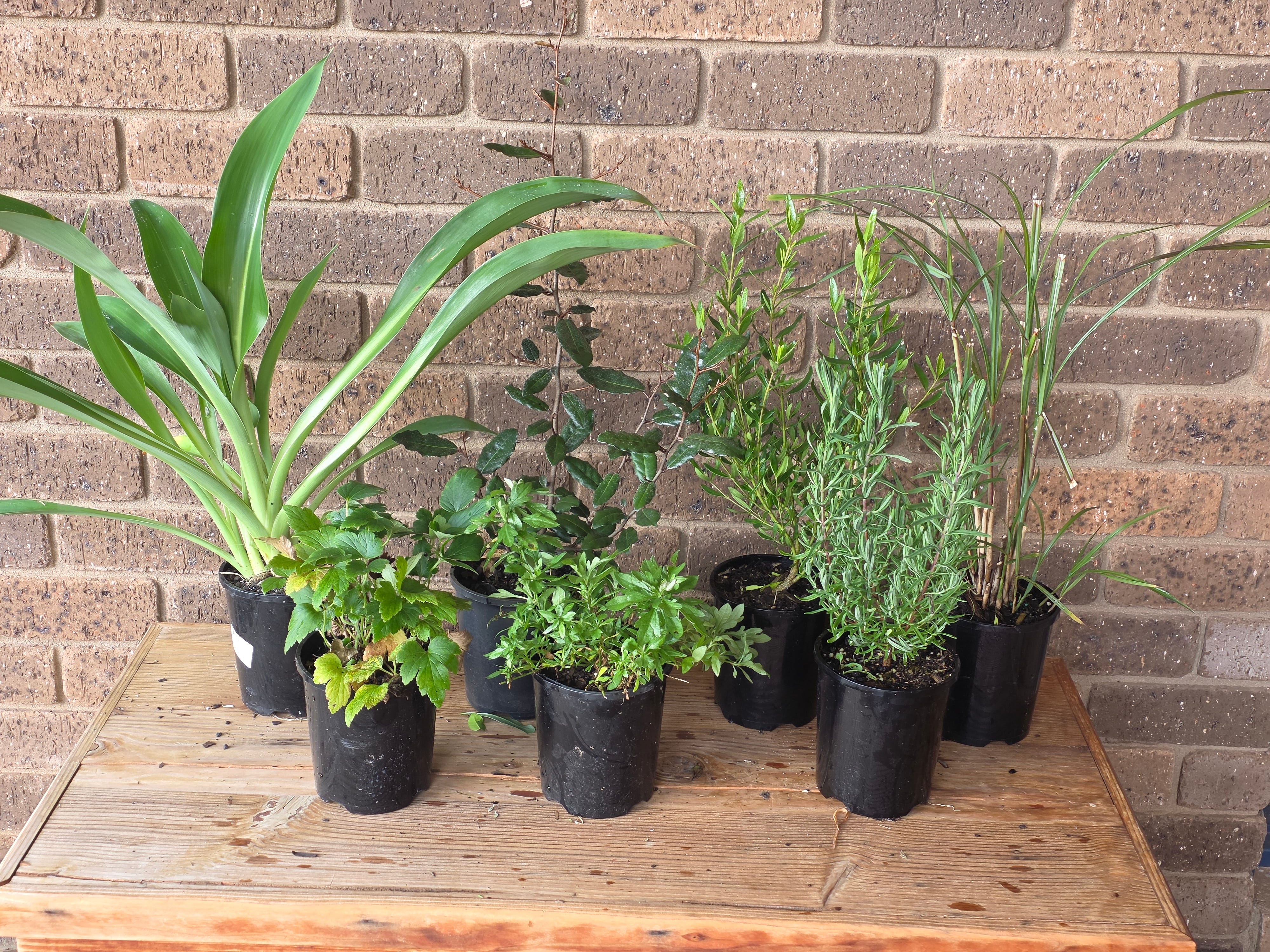
When you start looking at plant pot sizes you will also notice that there can be a variance in sizing between plants in the same size pot. It can be a little like shopping in a fruit shop. At different times of year you will have different sized plants in the same size pot for the same price. There is an Australian Standard for growing trees. This is supposed to give guideline as to how tall plants / trunk thickness etc should be however very few growers follow this regulation.
My Insider Tips For You To Follow Before You Buy
When you find a reliable grower I think you are best to stick with their stock. Here a few things to look out for when you are selecting your plants.
Before heading to the register, give your plants a quick check:
Check the Drain Holes: If thick roots are growing heavily out of the bottom, the plant may be pot-bound.
The “Squeeze” Test: Give rigid plastic pots a gentle squeeze. If it feels solid as a brick, the root mass has completely displaced the soil. This plant may be root bound, it may have circling roots which can be difficult to correct.
Check the Stem: Ensure advanced bagged trees are sturdy at the base and haven’t been planted too deep inside the bag (the root flare should be visible right at the soil surface).
The “Wiggle ” test - Does the plant have an established root system - grip the main stem of the plant at the top of the pot. Gently try to move the wiggle the stem. Does the plant move around in the pot loosely - if so it may have just been potted up into this pot. If there is only a slight movement of soil across the soil surface it should have a good spreading root system.
Ask about age & propagation: Is it a cutting/graft or a seedling?
Check the root-to-pot ratio: Is the root ball fully established without being pot-bound? Two plants can look identical on top, but what is going on below the surface can be completely different. If you lift a 200mm plant and half the soil falls away because the roots haven’t filled it yet, you’ve paid 200mm prices for 140mm root mass!
Look for structure over height: Is the plant bushy and strong, or just tall and stretched out looking for light.
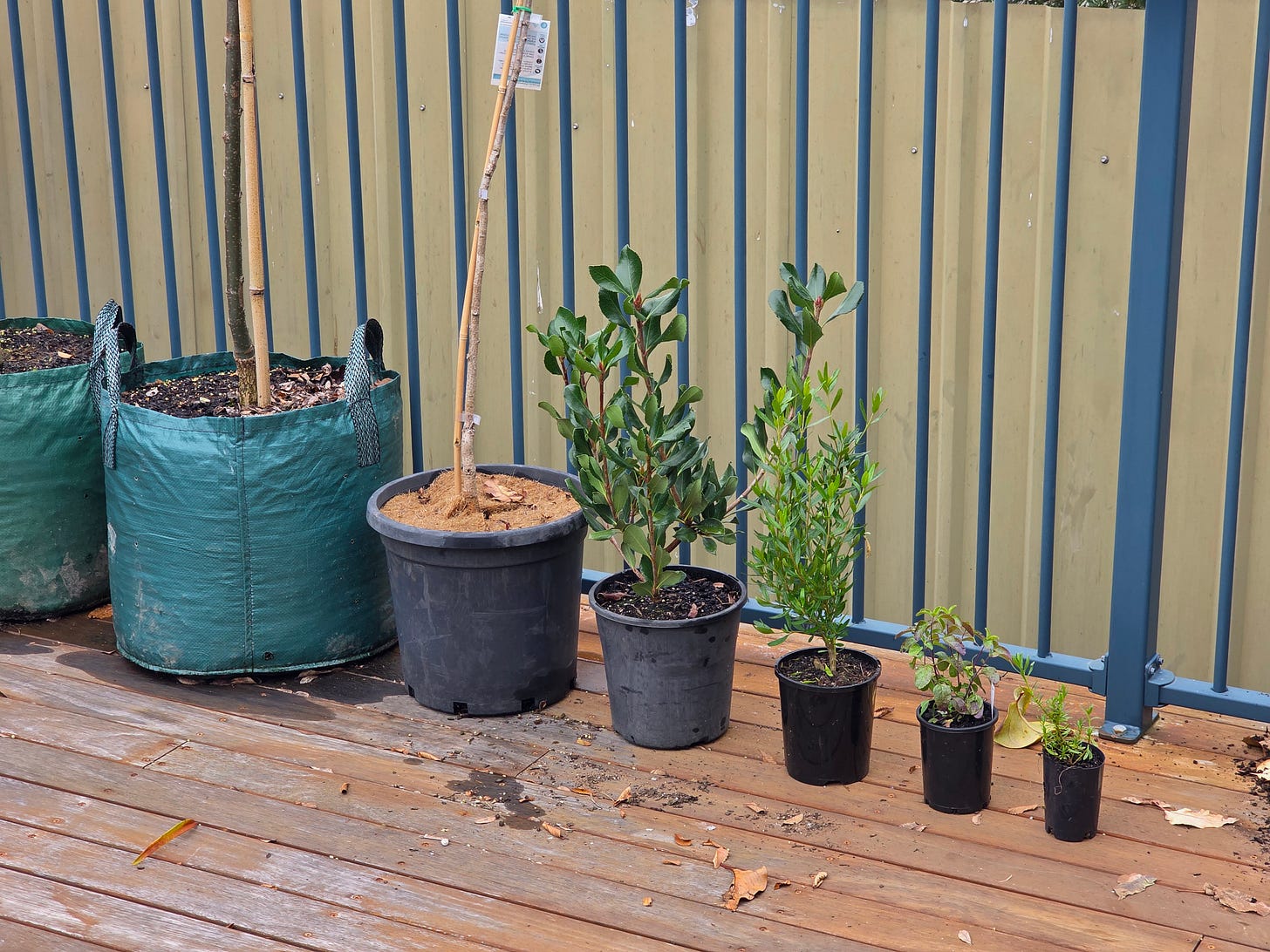
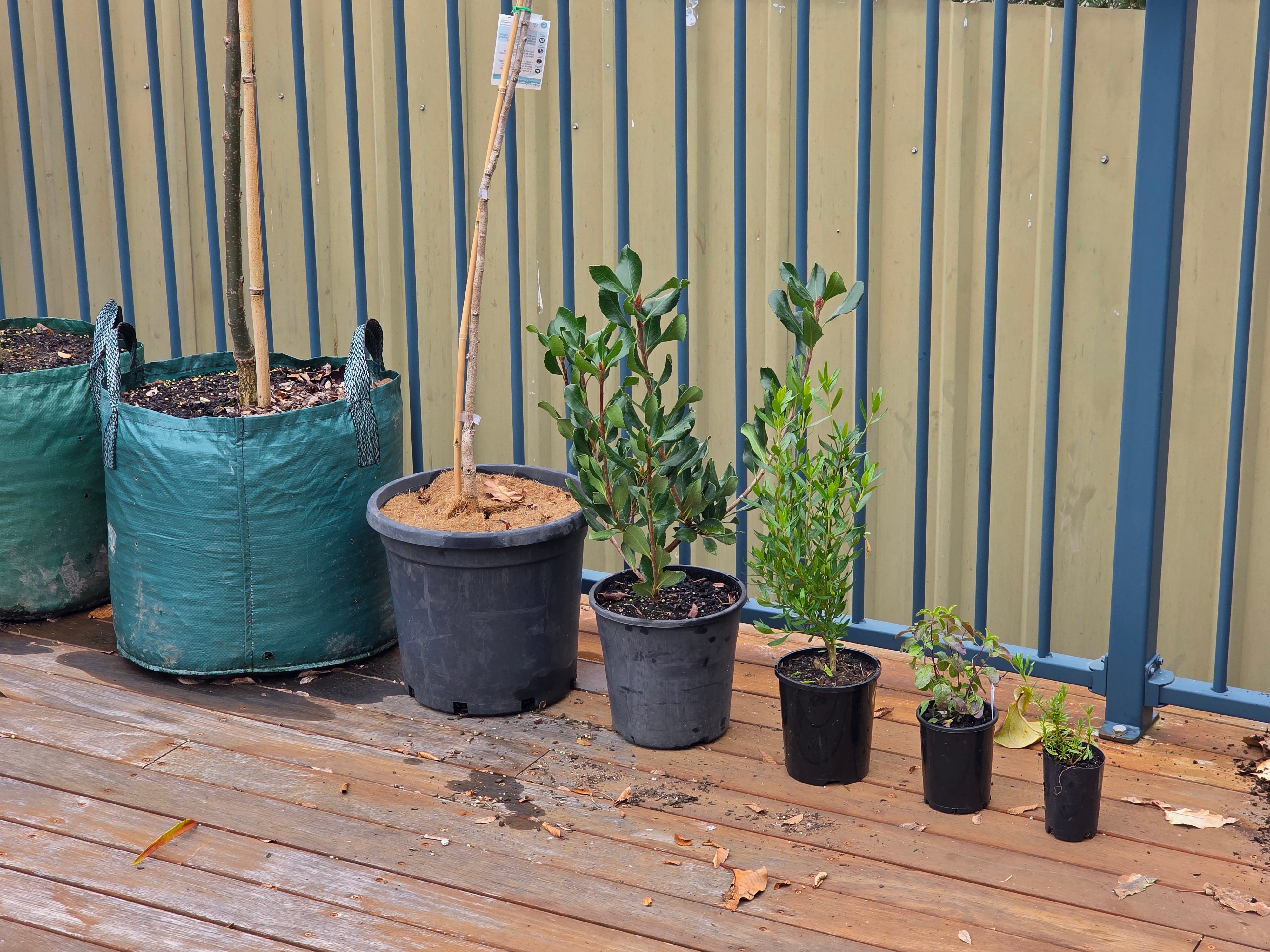
A range of pot sizes from left to right - 45 litre bag, 300mm pot (12 inch pot), 200mm pot (8 inch pot), 140mm pot (6 inch pot), 100mm pot (4 inch pot) , 40mm Tube stock
Understanding Your Plant Species
Understanding the characteristics of your plants species you are buying is also important. For example purchasing a soft wooded herbaceous perennial is very different from purchasing a deciduous tree. If you understand what type of growth your plant species has you will be able to make a more informed decision when selecting your plants.
A fast-growing, soft perennial like a Salvia or Gaura might fill out a 200mm pot in a matter of weeks. On the other hand, a slow-growing hardwood like a Japanese Maple or Buxus might spend a year or two in that exact same pot size to build trunk caliper and root density.
Insider Tip - Assuming all 200mm pots represent the same value.
You aren’t just paying for the volume of plastic or potting mix; you are paying for the months (or years) the nursery spent watering, pruning, feeding, and staging that specific plant.
Another area to understand is the propagation method:
Seedlings (Variable): Cheap to produce, but growth habits, flower color, and hardiness can vary wildly from plant to plant.
Cuttings / Clones (Uniform): Genetically identical, ensuring exact growth habit, colour, and form.
Grafted Plants (Specialised): Combines strong rootstock with premium top growth (common in fruit trees, roses, and weeping specimens). They take skilled labor to produce, making them naturally more expensive than a basic seedling in the same pot size.
Total Height vs. Trunk Caliper & Branching
When comparing advanced bagged trees (like 45L to 100L):
Height isn’t everything: A tall, whip-thin tree with a single stem that bends in the wind isn’t as valuable as a slightly shorter tree with a thick trunk caliper, well-spaced structural branching, and a developed canopy.
Pruning Hours: That bushy, well-structured tree required multiple hand-pruning sessions by a skilled grower over several seasons to create that form.
Why Tube Stock Often Outperforms Big Trees
Deep native tubes (40mm–50mm) are engineered to force roots straight down rather than around in circles. Because their root systems aren’t constrained or pot-bound, a $5 tube stock tree will often catch up to—and surpass—a 200mm potted tree within three years. If you have time on your side or a lot of ground to cover, start small.
Beware the “Upsizing Trap”
It’s tempting to buy a small plant and put it straight into a massive pot so it has “room to grow.” However, a small root system in a huge pot can’t drink water fast enough. The surrounding soil stays saturated, cutting off oxygen and leading to root rot. When repotting or potting up, aim for a container just 2 to 3 inches wider in diameter than the current one.
Bagged Trees vs. Rigid Pots
Ever wonder why advanced trees come in flexible black bags rather than hard plastic? Heavy-duty grow bags encourage “air pruning”—when root tips reach the edge and hit air through the fabric weave, they stop circling and branch out instead. This prevents severe root girdling before the tree goes into the ground.
Why is it better to buy younger plants?
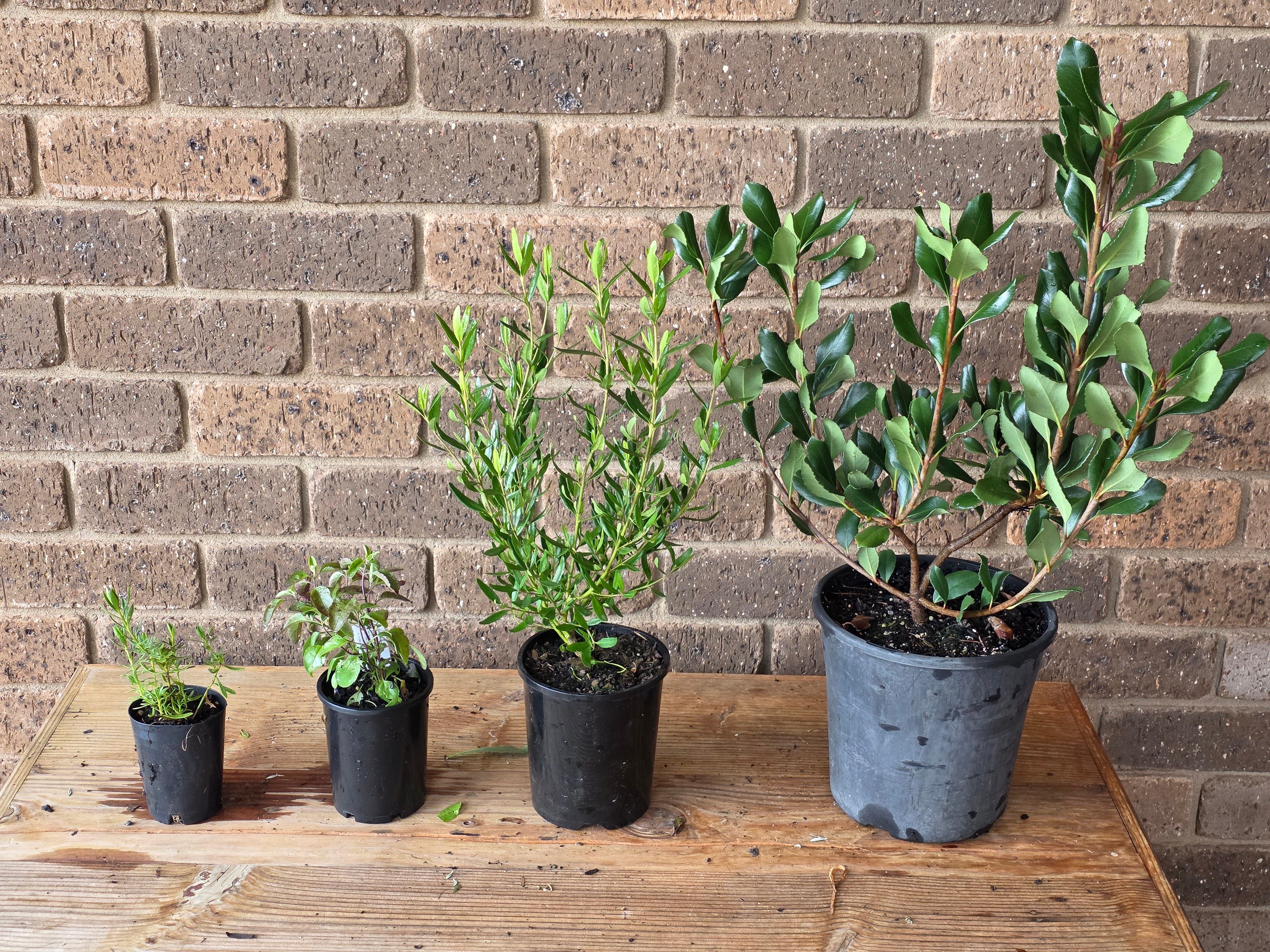
When you buy a larger pot, you aren’t just buying a bigger plant—you are buying time, soil volume, and root stability. However sometimes bigger is not always better. Smaller plants undergo significantly less transplant shock. Because their top growth is balanced with their compact root mass, they adapt to native soil almost immediately.
Insider Tip: A small plant in the right-sized pot will outgrow a root-bound monster trapped in a small pot within two seasons.
The Catch-Up Effect: A $5 tube stock tree planted at the same time as a $200 - 45L tree will often catch up in height within 3 to 4 years—and typically turns into a more resilient tree because its roots established deep into the surrounding soil early on, rather than circling in a pot.
Toughness in Harsh Conditions
If you are planting in heavy clay, rocky ground, or areas subject to extreme summer heat and frost, smaller plants are far better at adapting:
Less Water Dependency: Large specimen plants need massive, consistent irrigation for 12–18 months to keep their heavy top growth alive.
Hardening Off: Small plants grow with the local climate and soil conditions from day one, building cell density and drought tolerance suited specifically to your site.
Bulk Economics for Mass Planting
When putting in long hedges, windbreaks, ground covers, or large massed beds, budget efficiency matters:
Cost Factor: You can plant 20 to 30 tube stock plants for the price of a single 300mm feature pot.
Easier Installation: Digging fifty 50mm holes takes minutes; digging fifty 300mm holes requires major soil disturbance and far more manual labor.
When Should You Buy Large?
Going big still has its place! Reach for 45L+ bags or 300mm pots when:
You need immediate privacy or a focal point right now.
Planting slow-growing species (like Camellias, Buxus, or slow conifers) where waiting 5 years isn’t practical.
You are replacing a single lost specimen in a mature, established garden bed where a tiny plant would get shaded out or trampled.
From my 30 years of working in the horticulture industry, sourcing plants and selling plants for hundreds of landscape projects I do feel that one of the most advantageous steps to sourcing plants is building good relationships with growers or plant brokers. Educate yourself on what the plants sizes should be and what the level of plant quality should be. This in turn will ensure you are buying good quality, healthy plants from reputable growers. Don’t just go to the big box stores and expect to get a good quality plant. The plants might be cheaper however often they are not any cheaper and have not received the same level of care as a smaller nursery would give them. Always remember a $25 plant in a 200mm pot is not automatically the same thing as another $25 plant in a 200mm pot.
If you would like help with your next plant purchase or garden project please let me know.